
Checking Criminal History in Oxnard
Choose the Oxnard channel by record stage. A police report stays with Oxnard Police. A person booked into county custody appears through the Sheriff's inmate system. Once a prosecutor files charges, the court file belongs to Ventura Superior Court. California DOJ Record Review is available only for a person to inspect their own state criminal history through fingerprints.
- Contact Oxnard Police Records for a local incident and identify it by date, place, parties, and report number when known.
- Ask which release channel applies, since an active investigation, privacy rule, or juvenile restriction can limit a copy.
- Search Ventura County Sheriff Inmate Search by name or booking number for custody information.
- Use Ventura Superior Court's criminal and traffic search for filed charges, hearings, and disposition.
- For your own statewide record, follow California DOJ Record Review instructions and submit fingerprints through Live Scan.
Oxnard Police Records at South C Street
Oxnard Police Records and Property Division is at 251 South C Street, Oxnard, CA 93030. The records window is open Monday through Friday from 8 a.m. to 5 p.m., and the direct number is 805-385-7650. The department strongly recommends an appointment so staff can confirm that requested material is ready before a visit.
The official Oxnard Police records page describes the local unit and its services.
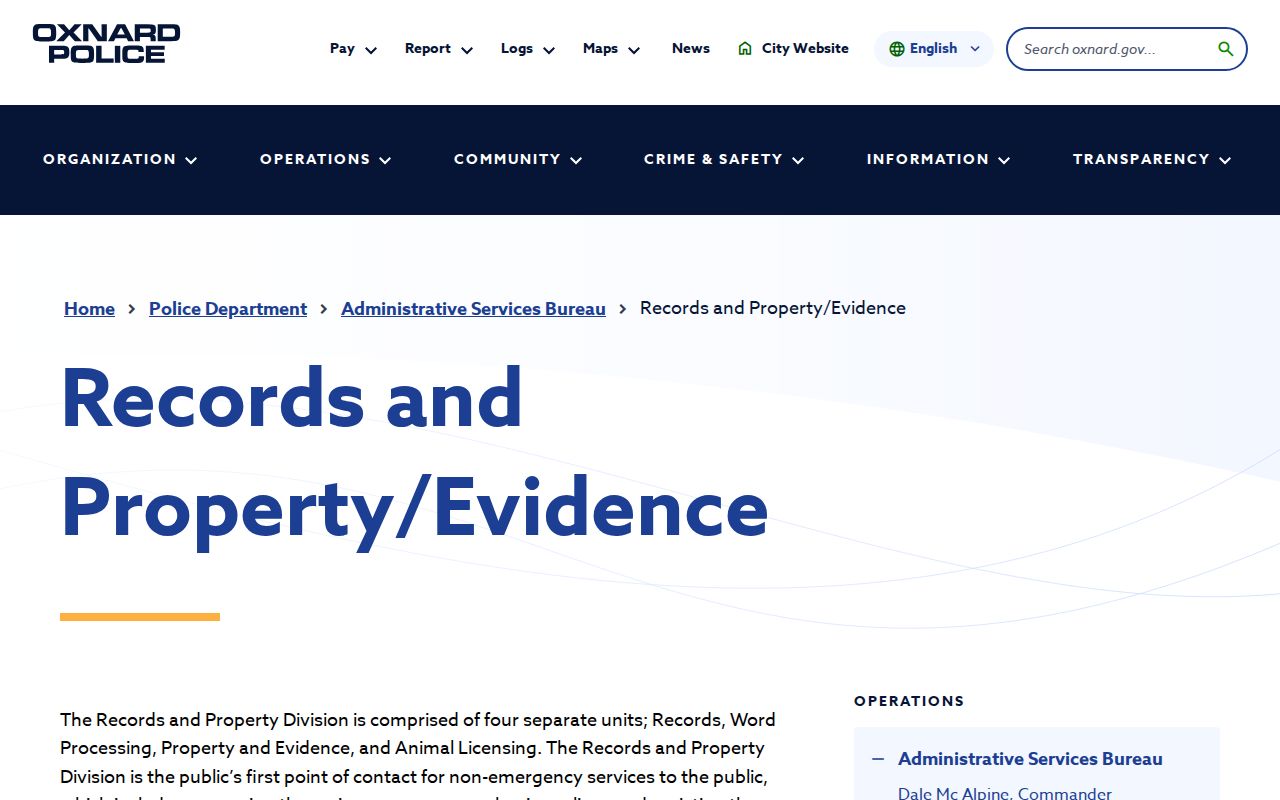
Staff handle counter inquiries, vehicle releases, clearance letters, offender registration compliance, subpoena control, and DOJ audits. That makes this the right first stop for an Oxnard police record, but not for a court judgment or county jail file.
Oxnard Police Department Records
Oxnard has its own police department. It creates the first report for incidents handled by its officers. A file can include narratives, statements, property data, and investigative material. Public release is a separate decision, so staff review whether an exemption or confidentiality rule limits the requested copy.
The department number is 805-385-7600, non-emergency is 805-385-7740, and the Watch Commander is 805-385-7746. Use 805-385-7650 for an existing record. No Oxnard police app was verified for record lookup. Oxnard 311 is a city service tool, not a police records search.
Oxnard Reports Go Through NIBRS Review
Oxnard's Word Processing Unit transcribes crime reports dictated by officers, checks format, audits data, and reports criminal data to NIBRS. Reports are reviewed and corrected before release to courts or the public when appropriate. This internal path explains why a new report may not be available the same day.
A report still in review differs from a report that is restricted. The first may become available after processing. The second may remain limited because of an investigation, confidential information, victim protections, or juvenile content. Records staff can explain status without promising release of protected material.
Oxnard Arrests and Bookings
An Oxnard arrest creates records at more than one level. Oxnard Police keeps the arresting-agency report. If the person enters county custody, booking data moves into the Ventura County Sheriff system. If the District Attorney files a case, the charges, hearings, plea, disposition, and sentence become Superior Court records.
Use the Sheriff Inmate Search by name or booking number. No result does not erase the police report: the person may not have entered county custody, may have been released, or the search details may differ. The Ventura County arrest lookup explains all county channels.
Oxnard Evidence Has Its Own Record Trail
Oxnard Property and Evidence handles intake, storage, crime-lab transfers, lawful release, disposition, and chain of custody. Its public window is by appointment, and the number is 805-385-7738. An evidence receipt or release question belongs with that unit, not the City Clerk.
An evidence log can intersect with a police report and a court case without being the same document. A report describes the investigation, a custody log tracks an item, and a docket records court events. Naming the exact record helps Oxnard staff locate the right system and apply the right access rule.
Municipal Court Records in Oxnard
Oxnard has no separate modern municipal criminal court. California unified municipal courts into Superior Court, so Oxnard criminal matters route to Ventura Superior Court. Online access uses the criminal and traffic search, while court records staff handle copies and files that need a direct request.
| Court Name | Superior Court of California, County of Ventura. |
|---|---|
| Case Types Heard | Filed misdemeanor and felony cases, with traffic matters through the appropriate division. |
| Case Lookup Channel | Ventura Superior Court public portal, criminal and traffic search, records counter, or records request. |
| What the Docket Shows | Case number, parties, filed charges, events, hearings, and public disposition details. |
| Juvenile Route | Juvenile matters go to the Juvenile Justice Center at 4353 E. Vineyard Avenue and have tighter access. |
Oxnard Juvenile Records Take a Separate Route
The Juvenile Justice Center is at 4353 E. Vineyard Avenue, Oxnard, CA 93036. Superior Court Records there maintains juvenile delinquency and dependency files as well as probate, guardianship, and adoption matters. Its records number is 805-289-8820.
Being in Oxnard does not make these ordinary city police records. Juvenile access is more restricted than adult criminal case access, and a requester may need a qualifying relationship or court authorization. Start with the center when the matter is juvenile instead of expecting the adult criminal portal to display it.
Where Oxnard Records Go
Oxnard Police begins the local chain. If an arrest leads to county booking, the Sheriff adds a custody record. If charges are filed, Ventura Superior Court adds the case. Reportable fingerprints and dispositions can then reach California DOJ's criminal-history repository.
Record flow: Oxnard Police Department › Ventura County Sheriff booking › Ventura Superior Court › California Department of Justice
Recent activity appears first at the police or booking stage. A final outcome belongs in court. California DOJ has no public name-search portal, but people can request their own fingerprint-based Record Review. That statewide file does not replace a direct Oxnard report request.
Oxnard City Records Are Not All Police Records
The Oxnard public records page covers writings about city business prepared, owned, used, or retained by Oxnard unless an exemption applies.
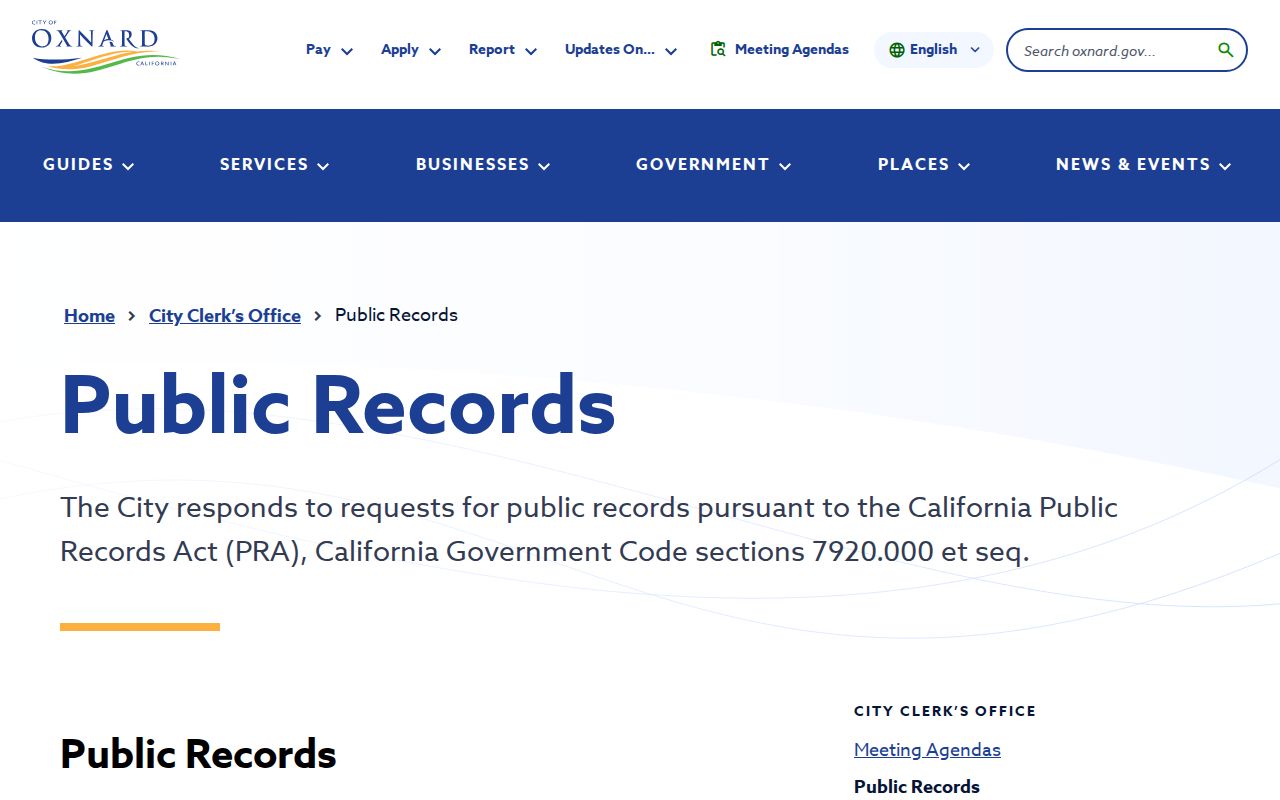
City Clerk material includes municipal government records. Police reports remain subject to law-enforcement release rules and should begin with Police Records. Picking the right Oxnard department reduces delay and avoids a broad request that does not identify the record holder.
Preparing an Oxnard Records Request
Before contacting Oxnard Police, write down the incident date, approximate time, location, involved names, vehicle details, and report number if one was issued. State the document needed, such as an incident report, collision-related record, clearance letter, or property receipt. That detail lets staff distinguish the record from similarly named events and determine whether Police Records or Property and Evidence should handle it.
Ask about the expected method of delivery and any proof of identity that applies to the requested file. The research does not establish a single fee for every Oxnard record, so confirm the current charge with the unit rather than assuming a price. If staff recommend an appointment, use it. The records window recommendation exists so material can be located and reviewed before the requester arrives.
When a police report leads to a court case, keep both identifiers. The Oxnard report number follows the agency file, while the Ventura Superior Court case number follows the prosecution. A booking number identifies a custody event. Supplying the wrong identifier to the wrong office can produce a no-record response even though another agency holds a related document.
For historical or research work, narrow the request by a real event and time span. The California Public Records Act supports access to identifiable public records, but it does not require Oxnard to answer open-ended questions or create a new summary that the city does not keep. Ask for existing writings, logs, or reports and allow staff to apply lawful redactions.
Reading an Oxnard Case Outcome
A police report records allegations and observations at the incident stage. It may list an initial suspected offense that differs from the charge later filed by prosecutors. Ventura Superior Court then records arraignment, motions, plea or trial activity, disposition, and sentence. Those later entries are the proper source for the legal outcome.
Use names carefully because court access may need a case number or exact party details, and juvenile matters will not follow the ordinary adult path. If an Oxnard arrest never becomes a filed case, the absence of a court docket does not automatically make the police report public or erase the arrest record. It means the court channel cannot supply a disposition that was never created.
When the docket uses an unfamiliar status, ask Superior Court Records what the entry means instead of guessing from a short code. The court's own file is the best place to confirm whether the Oxnard matter remains open, ended in dismissal, reached a plea or verdict, or produced a sentence.
Public Access Rules in Oxnard
The California Public Records Act governs Oxnard city and police records, but it does not make every criminal file public. Agencies can withhold protected investigative details, private personal data, juvenile material, and sealed records. Court files follow judicial access rules, not a generic City Clerk request.
Key Statutes:
California Public Records Act, Government Code section 7920.000 et seq. provides access to city records while recognizing exemptions.
California Penal Code section 11105 limits dissemination of state summary criminal-history information.
California court electronic-record rules explain why remote and courthouse access can differ.
Name the incident, date range, location, and record type in an Oxnard request. Staff can then search the correct system and explain any withholding. For a case outcome, use Superior Court rather than inferring guilt from an arrest report.
Access can also depend on who asks. A person involved in an incident may have a different release path than a member of the general public, and a victim may be asked for identity details before protected material is released. Oxnard staff can state what proof or authorization is needed. A denial or redaction should be read for the cited basis, since it may apply only to part of the file rather than every responsive record.
Keep the timeline in view when comparing sources. The Oxnard report records what officers documented at the start. The Sheriff booking record reflects custody. The Superior Court file reflects charges the prosecutor chose to file and the later judicial result. Differences among those records do not always mean an error; they often show that the matter changed as it moved through review. When a name, date, or disposition truly appears wrong, contact the office that owns that field and provide a copy of the source that supports the correction.
Older Oxnard records may also require direct staff help when they are not available through a current online search. Give a narrow date range and as much identifying detail as the request permits. Do not assume that a missing online result means a record never existed. At the same time, do not treat a police allegation as a finding of guilt. Only the court file can establish the filed charge and its disposition.